Research Article
Aim & Scope
The aim of the journal is to increase our knowledge of LIDAR technology. The applications of modelling the terrain and objects with scanning will be published.
The theoretical and applied research, case studies, short reports and letters to the editor of laser scanning data are published after it is decided that they can be published from peer review. The work prepared in accordance with the rules of writing is sent to the referees for evaluation by the journal editor. The publication is decided by the Editorial Board and the Editorial Board in accordance with the opinion of the referees. The submitted articles are not refundable whether they are published or not. All responsibility of the articles published in our journal (scientific, professional, legal, ethical etc.) belongs to the authors. The copyright of the published articles belongs to the journal and cannot be transferred without reference. In order to establish scientific communication between the researchers, the articles whose qualifications are explained below, which are not published elsewhere, should be published in English.
Review articles of sufficient number of scientific articles, summarize the subject at present level of knowledge and technology, make evaluations and interpret these findings by comparing them.
Articles describing a new method or technique explaining the important findings of a research.
Copyright Transfer of all articles is received by sending a form to the authors. Publications of authors who do not submit Copyright Transfer Form will not be processed. No add-ons can be made by the authors on the articles decided to be published.
Each article is sent to at least two referees related to the subject and examined in terms of form and content. After the manuscripts that can be published in the journal are arranged, they are sent to their authors and asked for review before printing. The responsibility of the errors that appear in the article as printed in the journal belongs to the authors. If the error is caused by the editorial office, the correction may be published.
All engineering applications of Lidar, Terrestrial laser scanning, Mobile laser scanning, UAV laser scanning and Airborne Laser scanning
Author Guidelines
Ethical Principles and Publication Policy
PUBLICATION ETHICS & MALPRACTICE STATEMENT
Publication ethics are kept in the course of publication processes in Turkish Journal of LIDAR (e-ISSN: 2717-6797) to assure the best practice guidelines and hence it is crucial for the journal’s editors, authors, and peer reviewers to abide by the ethical policies.
Turkish Journal of LIDAR conforms to the principles below that are described by COPE’s Code of Conduct and Best Practice Guidelines for Journal Editors (https://publicationethics.org/resources/code-conduct) and not only transparency principles, but also best practice in scholarly publishing pointed out by the Committee on Publication Ethics (COPE).
Duties of Editor-in-Chief & Section Editors
Objectivity
Editor-in-chief & section editors of the journal are account for deciding which of the manuscripts submitted to the journal ought to be published. In this process, the authors of the manuscript are not distinguished based on his/her race, ethnicity, gender, religion and citizenship by the editors. Editors´ decision to accept, revise or reject a manuscript for publication should be based merely on the importance, originality and clarity of the manuscript, and also convenience of the study performed in manuscript to the coverage of the journal.
Confidentiality
Editor-in-chief and section editors staff must not reveal any information about a submitted manuscript to anyone but the corresponding author, reviewers/potential reviewers and the publishing personnel. Editors will assure that all material submitted by authors remains confidential during the review process.
Conflicts of interest & Disclosure
Unpublished materials disclosed in a submitted manuscript must not be utilized in any reviewers’ own studies without expressing written permission of the author. Exclusive information or opinions attained from peer review process must be maintained confidential and not used for personal benefit. Reviewers ought not to take into account manuscripts in which they have conflicts of interest deriving from competitive, collaborative or other relationships/connections with any of the authors, companies or institutions linked to the articles.
Peer review process
The editor-in-chief/section editors must assure that a blind peer review process is effectively performed for each manuscript submitted to journal system.
Management of unethical behaviour(s)
The editors, together with the publisher(s), should take rationally responsive measures when ethical complaints have been presented regarding a submitted manuscript or published article.
Duties of Author(s)
Authorship of the paper
Authorship should be narrowed to those who have made a vital contribution to the reported study including conception, execution, design and interpretation. All authors made significant contributions to the submitted manuscript should be listed as co-authors.
Originality and plagiarism
The authors are responsible for the content, language and originality of the manuscript they submitted. The authors should assure that they have composed their original works entirely, and if the authors have used the study and/or words of other authors, that this has been conveniently cited or quoted. Plagiarism takes many forms varying from “passing off” someone´s paper as the authors’ own paper to copying or paraphrasing important parts of someone´s paper (without attribution), to claiming results from research performed by others. Plagiarism in all its forms comprises unethical publishing behaviour and is inadmissible. Before being sent a manuscript to reviewers, it is checked in terms of similarity by iThenticate to explore the plagiarism.
Acknowledgement of funding sources
All funding sources for the research reported in the manuscript should be acknowledged thoroughly at the end of the manuscript before references.
Disclosure and conflicts of interest
All authors should reveal in their manuscript any financial or other substantive conflict of interest which may be construed to affect the findings or interpretation of their manuscript. All financial support sources for the project should be disclosed as well. Disclosed examples of potential conflicts of interest include employment, consultancies, stock ownership, honoraria, paid expert testimony, patent applications/registrations, and grants or other funding. Potential conflicts of interest should be declared at the earliest stage possible.
Reporting standards
Authors of manuscript should present an accurate explanation of the study conducted and an objective discussion of its importance. Underlying data should be accurately given in the manuscript. A paper should include sufficient detail and references to allow other researchers to repeat the study. Tricky or knowingly imprecise statements form unethical behaviour and are unacceptable. Review and professional publication articles should also be precise, original and objective, and editorial opinion works should be described overtly as such.
Data access & retention
Authors might be asked to ensure the raw data in connection with a paper for editorial review process, and should in any event be prepared to keep in such data for a moderate time after publication.
Multiple, redundant or concurrent publication
Submitted manuscripts must not be under consideration of any other journal. Submitting the same manuscript to more than one journal concurrently comprises unethical publishing behaviour. The authors must also assure that the article has not been published elsewhere before.
Principal errors in published studies
When an author corresponds to a significant error or inaccuracy in his/her own published work, it is the author´s obligation to notify swiftly the journal editor or publisher and cooperate with the editor to withdraw or correct the paper.
Duties of Reviewers
Reviewers should review and send the review comments in due time period. If the manuscript is not in the reviewer’s field of interest, then the manuscript must be sent back to editor so that the other reviewers can be assigned without losing time.
Contribution
Reviewers are the main members contributing to the quality of the journal being a peer reviewed one. The reviewers who feel unqualified to review the received manuscript must swiftly notify the editor and reject to review that manuscript.
Confidentiality
Any manuscripts received for review must be treated as confidential documents. They must not be shown to or discussed with others except as authorized by the editor.
Objectivity standards
Reviews should be objectively performed. Personal criticism of the author is unsuitable. Referees should frankly express their aspects with supporting arguments.
Acknowledgement of sources
Reviewers should describe relating published study which has not been cited by the authors. Any statement that an observation, derivation, or argument had been previously reported should be accompanied by the relevant citation. A reviewer should also point out to the editor’s attention any vital resemblance or coincide between the manuscript under consideration and any other published paper of which they have personal information.
Disclosure & conflict of interest
Reviewers should not take into account the manuscripts in which they have conflicts of interest derived from competitive, collaborative, or other relationships/connections with any of the authors, companies or institutions linked to the manuscripts.
Price Policy
Türkiye LiDAR Dergisi Ücretsizdir.
Indexes












Journal Boards
Editor in Chief

Editor
Assistant Editor
Editorial or Advisory Board



 Web
Web
Doktora,KaradenizTeknikÜniversitesi,MühendislikFakültesi,HaritaMühendisliği,Türkiye 2009 -2014
YüksekLisans,KaradenizTeknikÜniversitesi,MühendislikFakültesi, JeodeziVe Fotogrametri,Türkiye 2006 -2009
Lisans,SelçukÜniversitesi,MühendislikMimarlık, JeodeziVe Fotogrametri,Türkiye 1999 -2005
İlçesiÖrneği,KaradenizTeknikÜniversitesi,FenBilimleriEnstitüsü,HaritaMühendisliği,2014
YüksekLisans,Karadeniz SahilYolununYapımı İleDeğirmendere’ninTrabzonLimanınaOlanEtkisininHidrografik
ÖlçmelerVeUyduGörüntüleri İle İncelenmesi,KaradenizTeknikÜniversitesi,FenBilimleriEnstitüsü, JeodeziVe
FotogrametriMühendisliği,2009
Doç.Dr.,ErzincanBinaliYıldırımÜniversitesi,MeslekYüksekokulu,Mimarlıkve Şehir PlanlamaBölümü,2022 -DevamEdiyor
Dr.Öğr.Üyesi,ErzincanBinaliYıldırımÜniversitesi,MeslekYüksekokulu,Mimarlıkve Şehir PlanlamaBölümü,2018 -
2022
Yrd.Doç.Dr.,ErzincanBinaliYıldırımÜniversitesi,MeslekYüksekokulu,Mimarlıkve Şehir PlanlamaBölümü,2014 -2018
AraştırmaGörevlisi,KaradenizTeknikÜniversitesi,MühendislikFakültesi,HaritaMühendisliği,2006 -2014
AraştırmaGörevlisi,ErzincanBinaliYıldırımÜniversitesi,MeslekYüksekokulu,Mimarlıkve Şehir PlanlamaBölümü,2005
-2006



 Web
Web
Mustafa Ustuner received his PhD and MSc degrees in Geomatic Engineering from Yildiz Technical University and his BSc in Geodesy and Photogrammetry Engineering from Karadeniz Technical University, Türkiye. He was a visiting researcher in the Geo-Spatial Analytics Lab at the University of South Florida in the US and in the Department of Earth Observation, Institute of Geography at the Friedrich-Schiller-University of Jena in Germany.
Currently, He is working as an assistant professor for Samsun University, Türkiye. As an editorial task, I have been serving as an associate editor for the European Journal of Remote Sensing, Turkish Journal of Remote Sensing and Geoplanning: Journal of Geomatics and Planning. Also, He was one of the guest editors of the special issue entitled "Advances in Remote Sensing for Monitoring and Characterising Vegetation Responses to Changing and Extreme Climatic Conditions" in MDPI Remote Sensing.
His main research interests include Polarimetric Synthetic Aperture Radar (PolSAR) Remote Sensing, Applied Machine Learning and particularly Hyperspectral Data Analysis. Recently, he is working on dimensionality reduction and classification of hyperspectral images.

Professor in 3D GIS at Universiti Teknologi Malaysia. Co-Chair for Land Administration Domain Model at FIG (Federation International of Geomatic) from 2022 to 2026.
Mustafa Zeybek is now an assistant professor at the University of Selcuk, Turkey. His research interests include LiDAR, computer graphics, computer vision, UAV image processing, R programming and 3D reconstruction.
Integrated researcher at CICANT, Universidade Lusófona (https://doi.org/10.54499/CEECINST/00002/2021/CP2788/CT0006). Artist, computer scientist, and digital animation researcher, his primary focus lies in exploring the representation of the human body through algorithmic processes. Serving as the Principal Investigator for the Ghost Dance project (DOI 10.54499/EXPL/ART-PER/1238/2021), he focuses on analyzing dance movement in interaction with virtual reality. Formerly a Marie Sklodowska-Curie Fellow with affiliations at MIRALab, University of Geneva, and BioISI, Faculty of Sciences, University of Lisbon, he has received sponsorship from prestigious institutions like the European Research Agency and the Foundation for Science and Technology. His expertise in animating human movement has led to a diverse research career spanning academia, including Lusófona University, University of London, University of Geneva, University of Lisbon - Faculty of Sciences, and Faculty of Human Kinetics. Additionally, he co-founded and served as the Chief Technology Officer of AnabiVirtual, a spin-off company dedicated to developing interactive experiences involving augmented reality (AR) and virtual reality (VR) for cultural sites. He earned his Ph.D. in Computational Arts and Technologies from Goldsmiths, University of London, bridging the realms of art, science, and technology. His journey as a visual artist began in the early 1990s at Ar.Co in Lisbon, Portugal. Notably, his work was awarded in the VIDA competition for art and artificial intelligence (editions 12 and 13). His contributions extend to various publications, including Preble's Artforms book, the scientific magazine ALife, Leonardo Electronic Magazine, and several art catalogues.

Dr. Khalil Valizadeh Kamran is currently working as a full Professor in the Department of Remote Sensing and GIS, University of Tabriz , Iran. His research interests includes Land use/Land cover classification, monitoring and change detection, Image processing, Thermal remote sensing, Remote sensing and GIS applied to climatology,Remote sensing and GIS application for Geohazard monitoring and risk assessment, SAR image processing, GIS based climatology. He is serving as an editorial member and reviewer of several international reputed journals. Prof. Dr. Khalil Valizadeh Kamran is the member of many international affiliations. He has successfully completed his Administrative responsibilities. He has authored of many research articles/books related to Land use.
I am guest researcher at Mersin University as a TUBITAK project
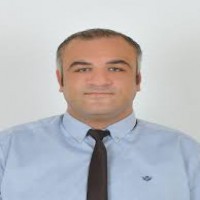

Elliot Hartley is the Managing Director of Garsdale Design, and an internationally recognised 3D geodesign expert. He is also known as a pioneer and instructor in the use of Esri’s ArcGIS CityEngine for urban planning projects and 3D city modelling.
Elliot has had more than 20 years working in the fields of GIS, planning, 3D urban modelling and geodesign. He has spent some of that time working as a Senior Planner in private practice, as well as a Development Control officer within local authority planning Departments.
He has consulted for and trained teams in some of the world’s leading planning and architectural consultancies in Europe, North America, and the Middle East. In addition, he has also provided training and services for local government/city authorities in Europe, North America, and the Middle East.
As a subject matter expert in 3D urban modelling Elliot has spoken and conducted workshops/webinars/seminars at many international events on topics of planning, 3D urban modelling and geodesign.
Layout Editor
Turkish Journal of LiDAR/Turkey LiDAR Journal